
Most people sign up for a first aid course only after someone at their workplace insists on it. That’s fine. What’s not fine is picking a course without checking whether it actually meets Singapore’s regulatory requirements.
The Workplace Safety and Health (First Aid) Regulations mandate that appointed first aiders hold a valid, accredited certificate. If you sit through a course that isn’t recognised by the Singapore Resuscitation and First Aid Council (SRFAC) or the Ministry of Manpower (MOM), that certificate doesn’t count for compliance. You’ll have wasted the time and the fee.
Here’s what actually separates a credible first aid course in Singapore from a generic workshop with a nice brochure: accreditation, trainer quality, and what happens after you finish the assessment.
Why Accreditation Is the First Thing to Check
SRFAC and MOM Recognition
SRFAC, the Singapore Resuscitation and First Aid Council, sets the clinical guidelines for all first aid and CPR training in Singapore. A course that isn’t aligned to SRFAC standards has no regulatory standing. Period.
For workplace appointments, MOM recognition matters too. The Occupational First Aid course is the gold standard for appointed first aiders in factories, construction sites, and any environment where 25 or more workers are employed.
SkillsFuture Funding Eligibility
Accredited courses are also eligible for SkillsFuture subsidies, which can cut fees by 50 to 70 percent for Singapore Citizens and PRs above 21. Non-accredited courses get no funding. When evaluating options, check the course code against the MySkillsFuture portal before you register.
What the Course Actually Covers
Core Skills in Any Credible Programme
A proper first aid training programme in Singapore goes well beyond bandaging a cut. The syllabus at the Occupational First Aid level includes CPR with AED use, management of choking in adults, wound and bleeding control, fracture management, burns, and recognition of medical emergencies like stroke and heart attack.
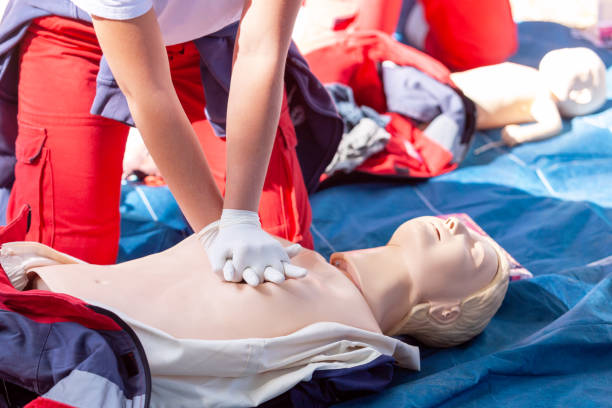
Practical competency is assessed, not just theoretical knowledge. Participants complete a 40-question multiple-choice theory paper and pass a hands-on practical that includes two full minutes of continuous chest compressions on a training manikin. If the physical demands concern you, declare any medical conditions upfront.
How Classroom Learning Differs from e-Learning
Some courses now offer asynchronous e-learning components followed by a shorter in-person session. The Standard First Aid course, for instance, uses this blended approach. Occupational First Aid is fully face-to-face across three days, which is why it earns the higher MOM recognition and longer validity period.
What Good Trainers Look Like
And this is where it gets interesting. The trainer is the variable most candidates ignore.
Good first aid instruction requires someone who can hold a room, correct a compression technique without embarrassing the participant, and give clear feedback under time pressure. Look for courses where you can see trainer reviews, or where the academy makes individual instructor credentials visible.
Training manikin quality also matters. High-fidelity feedback manikins like Laerdal QCPR and Brayden models show compression depth and rate in real time, which accelerates skill acquisition significantly compared to basic plastic mannequins.
How to Pick the Right Course for Your Situation
If your HR team is tracking MOM compliance, book the Occupational First Aid course. If you’re a parent, carer, or sports coach, the Standard First Aid or Child First Aid course covers the scenarios you’re most likely to face. For healthcare workers and emergency volunteers, BCLS with AED certification is the appropriate level.
That sounds obvious, but most people do the opposite, attending whichever course is cheapest or nearest without checking if it matches their actual role requirements.
Frequently Asked Questions
What is a first aid course in Singapore?
A first aid course in Singapore is an accredited training programme that teaches participants to provide immediate care for injuries and medical emergencies. Courses are regulated by SRFAC and, for workplace appointments, recognised by MOM.
How long does a first aid course take?
Duration depends on the level. CPR+AED takes half a day, Standard First Aid runs one to two days, and Occupational First Aid is a full three-day in-person programme worth 24 contact hours.
What is the difference between a first aid course and a first aider course?
They refer to the same thing in most contexts. A first aider course specifically trains someone to be appointed as a workplace first aider under the WSH (First Aid) Regulations, making the Occupational First Aid course the correct choice.
Who should attend a first aid course in Singapore?
Appointed workplace first aiders, safety officers, teachers, coaches, parents, and anyone who wants to respond competently to emergencies. Some roles have mandatory certification requirements under Singapore law.
How do I choose a first aid course provider in Singapore?
Check for SRFAC accreditation, verify the course code on MySkillsFuture, review trainer qualifications, and confirm the course meets your specific role requirements before registering.